Help
Choosing the right size
Every tag comes in small, medium and large. The short version: small suits cats and toy or small dogs, medium fits most dogs, and large is for the big and giant breeds. Here is how to choose with confidence — and a few ways to get it exactly right.
How to choose
A good tag balances two things: it should be big enough that your phone number can be read at a glance, and light enough that your pet forgets it is there. For most owners the deciding factor is simply your pet’s size and the width of their collar.
- Match the collar. Pick a tag that sits comfortably on the collar without overhanging the edges or swinging heavily.
- Think about the engraving. A longer name plus a phone number reads more easily on a larger tag. Both sides of a double-sided tag give you more room.
- When you are unsure, size up for legibility on an active dog, and size down for comfort on a small pet or a cat.

For dogs
Use your dog’s weight as a starting point, then adjust for collar width and how much engraving you want. The breed examples below are a guide, not a rule.
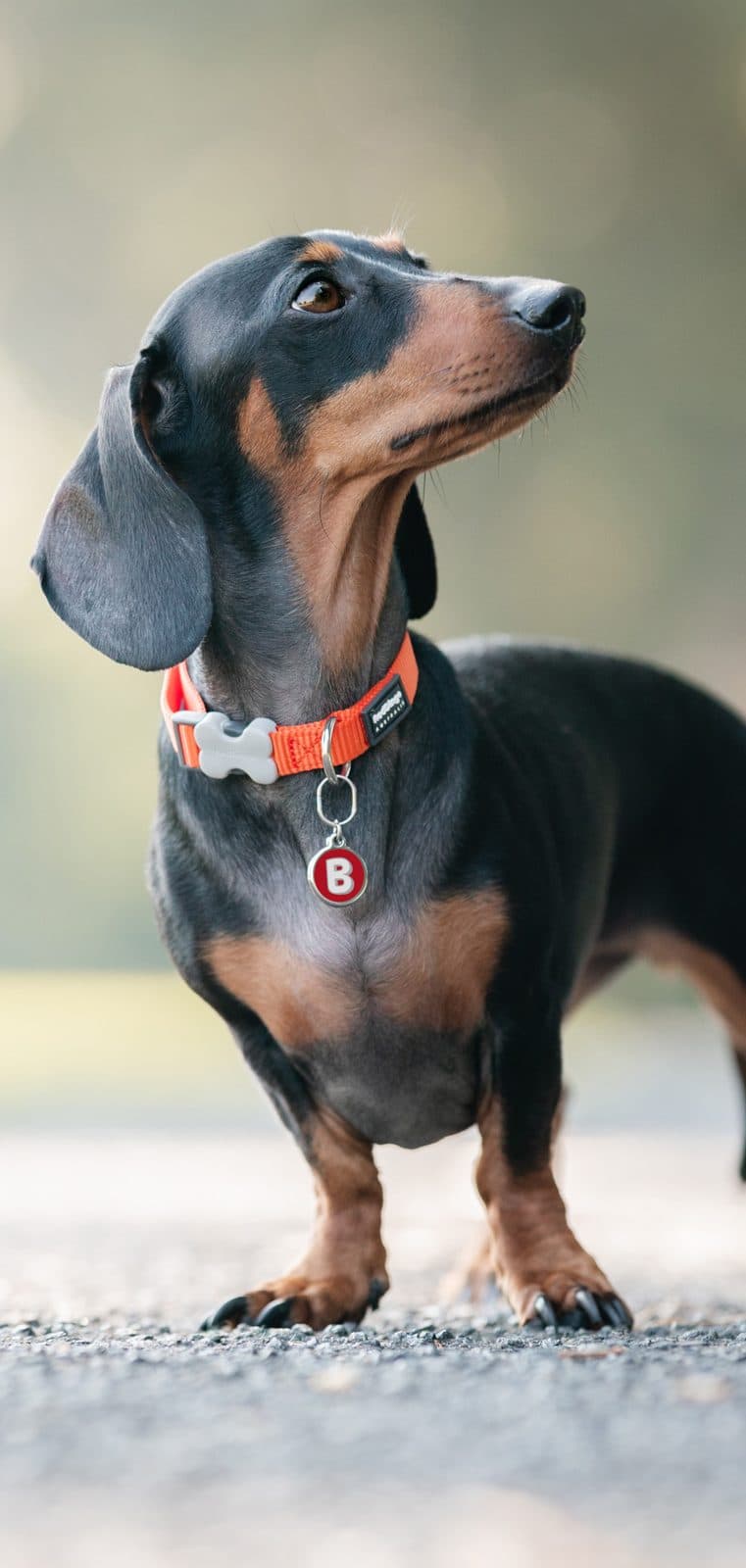
Small tag
20 mm round · Dogs up to about 10 kg
Light and discreet for toy and small breeds, so the tag never outweighs the collar.
Example breeds
Chihuahua, Pomeranian, Toy Poodle, Maltese, Miniature Dachshund, Yorkshire Terrier, Shih Tzu, Jack Russell
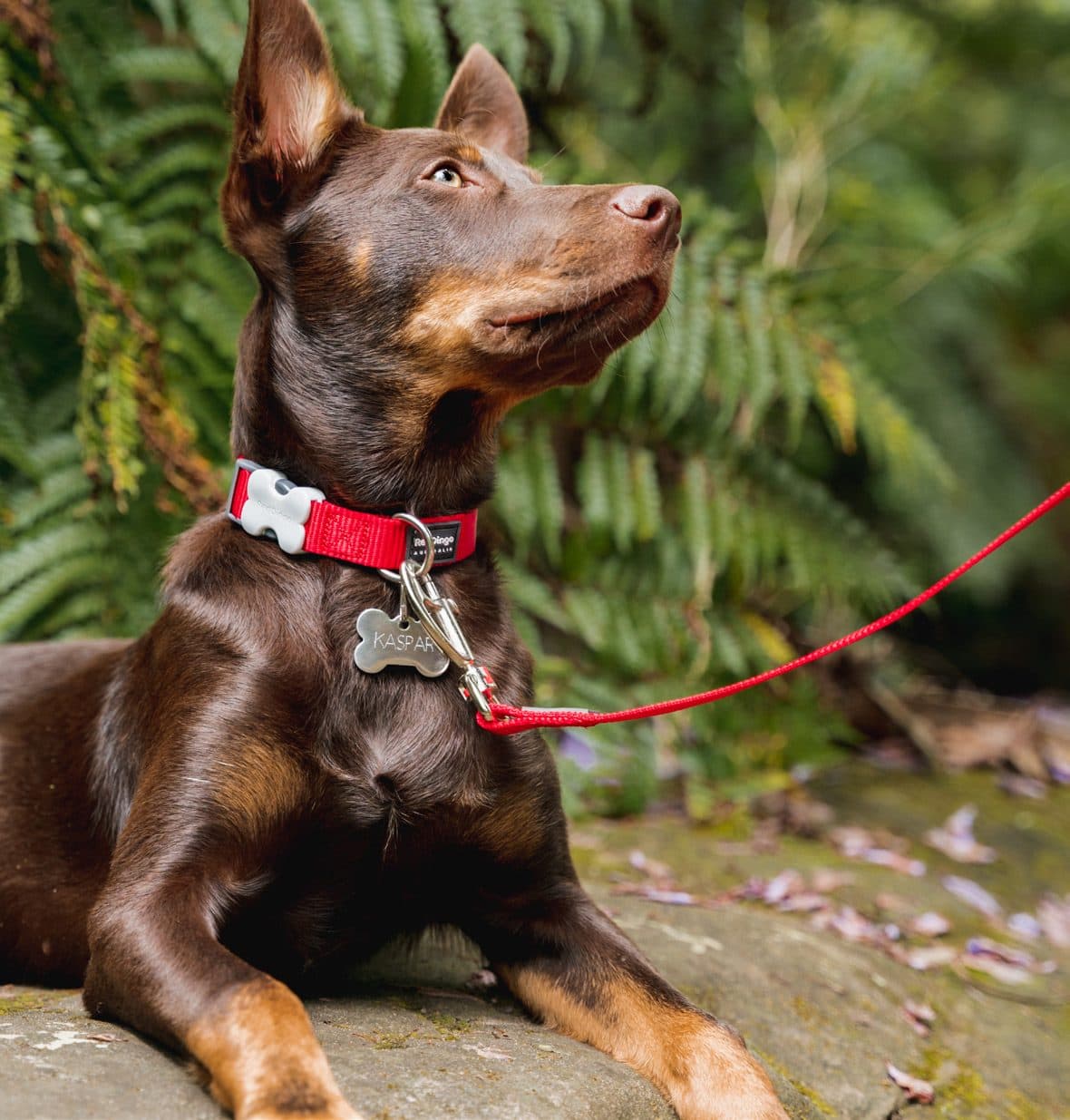
Medium tag
30 mm round · Dogs roughly 10–25 kg
The everyday choice for most dogs — room for a name and a phone number that reads at a glance.
Example breeds
Beagle, Cocker Spaniel, Border Collie, Staffy, Kelpie, Labrador, Golden Retriever, Boxer
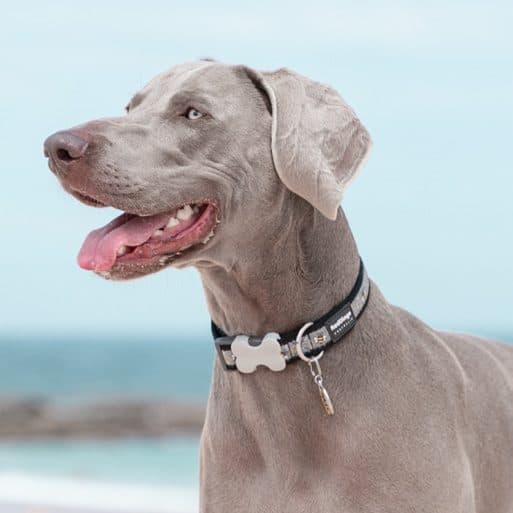
Large tag
38 mm round · Dogs over about 25 kg and giant breeds
The most legible tag, easy to read from a step back and well matched to a wide collar.
Example breeds
Great Dane, Mastiff, Saint Bernard, Newfoundland, Rottweiler, Bernese Mountain Dog, Irish Wolfhound

For cats
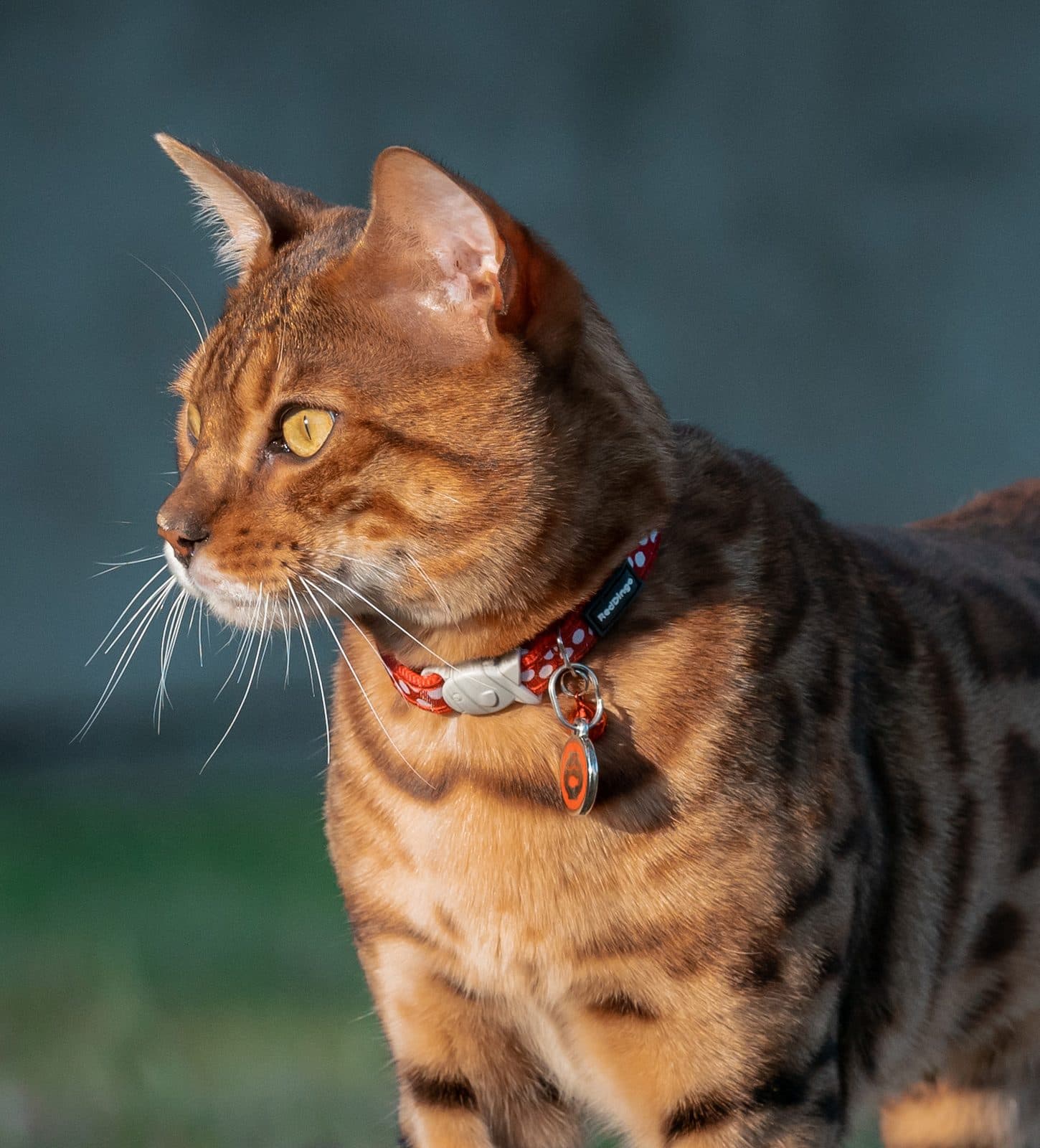
A small tag suits virtually every cat. Even larger breeds like the Maine Coon and the Ragdoll are best in a small tag — the choice is about comfort rather than the cat’s size, keeping the tag light and unobtrusive on a slim collar.
A safety note: cats should wear a breakaway (quick-release) collar that opens under pressure if it snags. A light small tag is well matched to that kind of collar.
Tag dimensions
Representative sizes are below. Round tags share one diameter per size; shaped tags such as bones, hearts and shields vary a little. The exact millimetres and weight for any design appear in the customiser the moment you choose a size.
| Size | Round diameter | Shaped tags | Weight |
|---|---|---|---|
| Small | 20 mm | ~18–30 mm wide | from ~1 g |
| Medium | 30 mm | ~26–39 mm wide | from ~2.5 g |
| Large | 38 mm | ~33–48 mm wide | from ~3.5 g |
Figures are approximate and drawn from the current range. Double-sided tags give you a second face for extra engraving.
Common questions
- What size pet ID tag should I choose?
- It comes down to balancing legibility against weight. Small suits cats and toy or small dogs, medium fits most dogs, and large is best for big and giant breeds. Match the tag to the collar so it sits comfortably, and size up if you want a longer name and phone number to read at a glance.
- What size tag is best for a cat?
- A small tag suits virtually every cat, including larger breeds like the Maine Coon and Ragdoll — the choice is about comfort rather than the cat’s size. Pair it with a breakaway (quick-release) collar that opens under pressure if it snags.
- What size does a large or giant-breed dog need?
- A large 38 mm tag is the most legible and is well matched to a wide collar. It suits dogs over about 25 kg and giant breeds such as the Great Dane, Mastiff and Rottweiler.
- What are the tag dimensions?
- Round tags are about 20 mm (small), 30 mm (medium) and 38 mm (large) in diameter; shaped tags such as bones and hearts vary a little. The exact millimetres and weight for any design appear in the customiser the moment you pick a size.
Ready to design?
Pick a design and a size, add your engraving, and see exactly how your tag will look before you order.