Cats are curious, quick and quietly determined to see what's on the other side of the fence. A good collar and a readable ID are how a wanderer finds their way back to you — and how a frightened escapee gets home before they get far.
Start with a breakaway collar
If you read nothing else, read this. A cat’s collar should be a breakaway (quick-release) one. Cats climb, squeeze through gaps and explore, and a fixed buckle collar can catch on a branch, a fence or a paling and trap them. A breakaway collar is made to pop open under exactly that kind of pressure, so your cat frees themselves and you simply clip it back on. It is the single most important safety choice you will make for a collared cat.

Get the fit right
A collar that is too loose is as risky as one that is too tight — a leg or the lower jaw can slip through a loose one. Aim for two fingers snug between the collar and your cat’s neck, no more. Kittens grow quickly, so check the fit every week or two and loosen or size up before it ever starts to pull. With a brand-new collar, give your cat a few days to get used to it indoors before they head out.
Wear a tag and a microchip — both
A microchip is the permanent backup, but it only works once someone catches your cat, gets them to a vet or shelter to be scanned, and your details on the registry are current. An engraved ID tag does the job on the spot: a neighbour two doors down can read a name and a phone number and call you that afternoon. The two work best together.
Keep the tag light and small — a 20 mm round suits most cats — and put your cat’s name and a phone number you actually answer on it, leaving your home address off. Because every Red Dingo tag is deep diamond engraved, the details stay readable for years, and it arrives in an envelope personalised with your cat’s name.
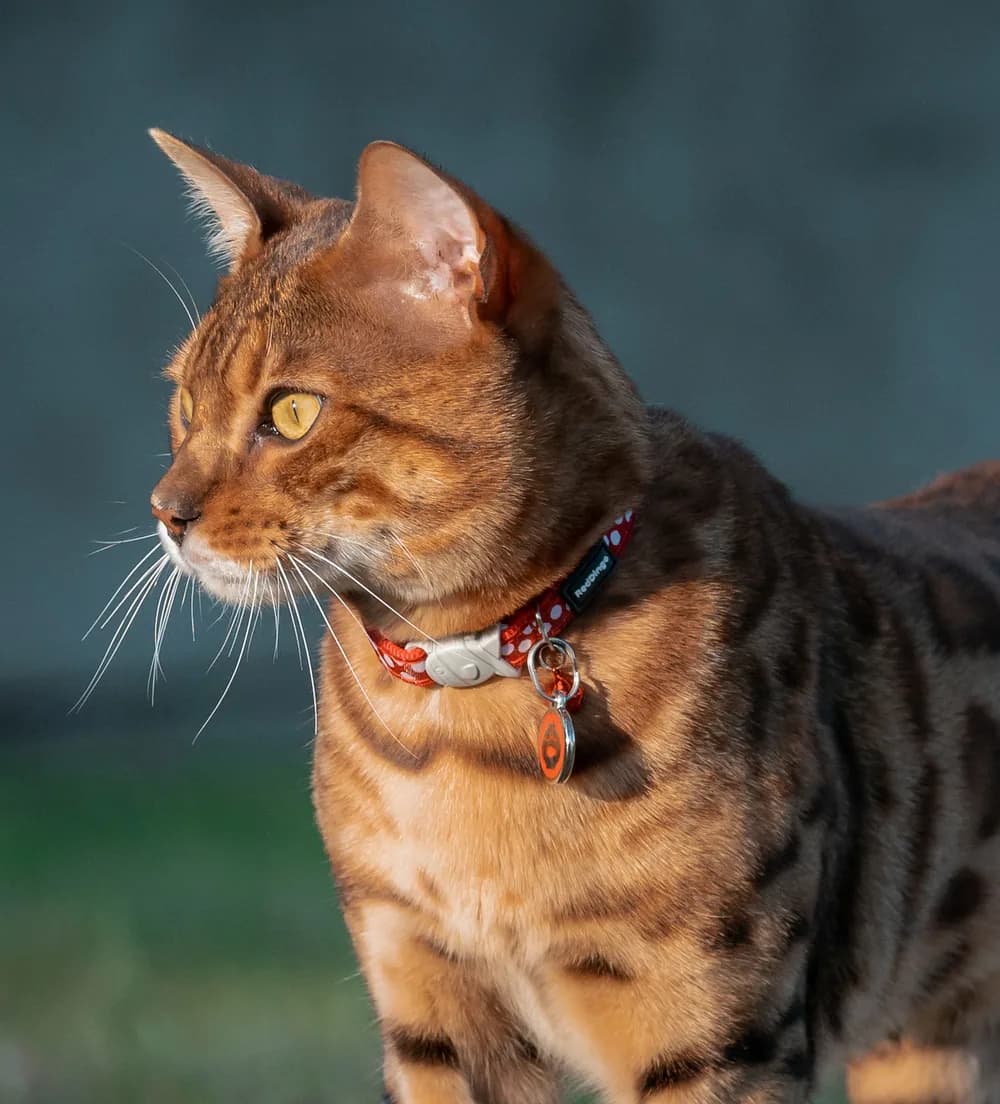
You can preview a cat tag at any size in the customiser, or browse the cat tags range.
Indoor cats need ID too
It is tempting to think an indoor cat does not need a collar or tag. But indoor cats are often the very ones who panic and bolt when a door is propped open for the shopping, a window screen gives way, or a tradie leaves the gate ajar — and an indoor cat outside is far less street-smart than a seasoned outdoor one. A breakaway collar and a tag, plus that microchip, mean a frightened escapee can be identified and returned before they get far.
Bells, reflection and our native wildlife
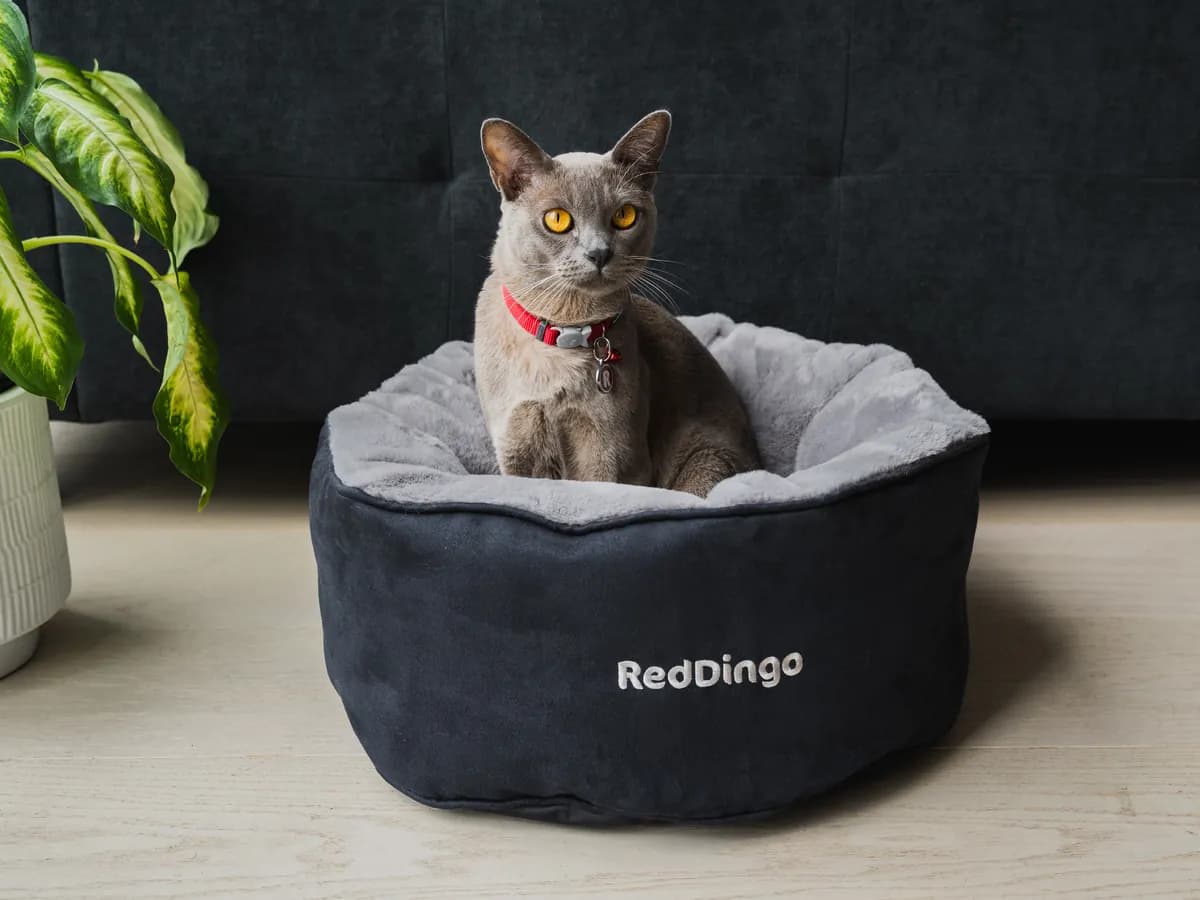
A small bell on the collar gives birds and other native wildlife a fighting head start, which is worth thinking about wherever you are in Australia. Many councils now have cat-containment or curfew rules as well, so it is worth checking what applies where you live. And a reflective collar helps drivers spot a cat at dawn and dusk, when they are most active and hardest to see. None of these replaces a tag — they simply stack the odds further in your cat’s favour.
A quick safety checklist
- A breakaway (quick-release) collar — never a fixed buckle on a cat.
- A two-finger fit, checked often while they are still growing.
- A light, engraved tag with a name and a phone number — and no home address.
- A microchip, with your details kept up to date on the registry.
- Optional but worth it: a bell for the wildlife, and reflective trim for low light.
Common questions
- Does an indoor cat really need a collar and tag?
- Yes. Indoor cats are often the ones who bolt when a door is propped open or a window screen gives way, and they tend to be less street-smart outside than a regular outdoor cat. A breakaway collar with a tag, backed by a microchip, means a frightened escapee can be identified and brought home quickly.
- Will a breakaway collar just fall off?
- It is designed to release under genuine pressure — a snag on a branch or fence — rather than during normal activity. Some cats shed a few while they get used to one, but a correctly fitted breakaway collar stays on for everyday wear, and the safety trade-off is well worth it.
- What should I put on a cat’s ID tag?
- Your cat’s name and a phone number you actually answer. Add a second number if it fits, and leave your home address off. Keep it short so the engraving stays easy to read at a glance.
- What size tag suits a cat?
- A small, light round tag — around 20 mm — sits comfortably on a slim cat collar without weighing your cat down, and still has room for a name and number.
- Is a microchip enough on its own?
- A microchip is the permanent backup, but it only helps once someone catches your cat and a vet or shelter scans it, and only if your details on the registry are current. A visible, engraved tag gets your cat home faster, so the two work best together.